Ward & Co
An exhibition bringing together a diverse group of artists, both new voices and established figures, in contemporary British abstract painting.
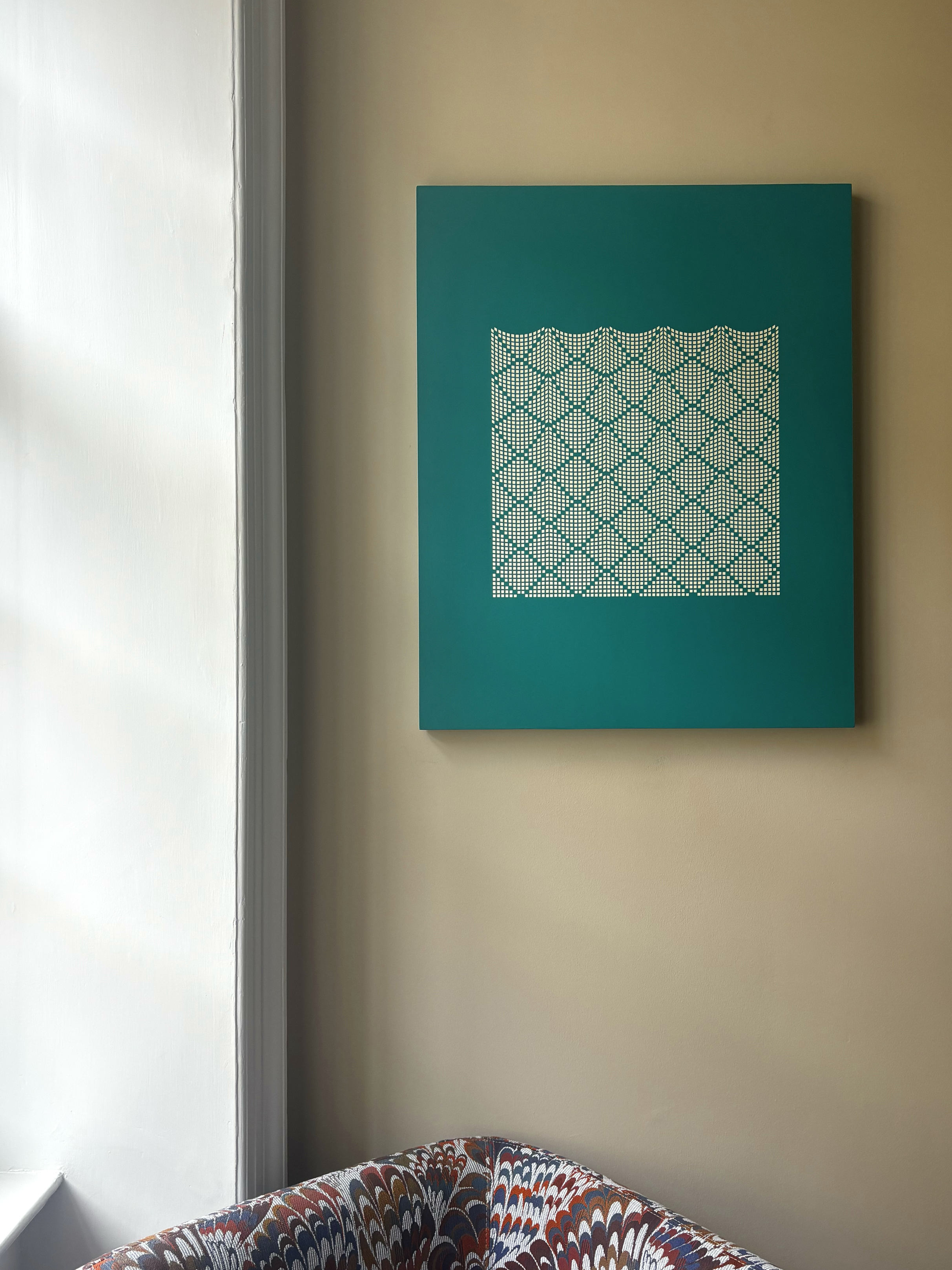
For more than 60 years, Tess Jaray has developed a practice which explores pictorial and architectural space through abstract painting. Informed by Renaissance and Middle Eastern architecture as well as certain aspects of Op Art, Minimalism and Colour Field painting, her work defies categorisation, offering a singular perspective.
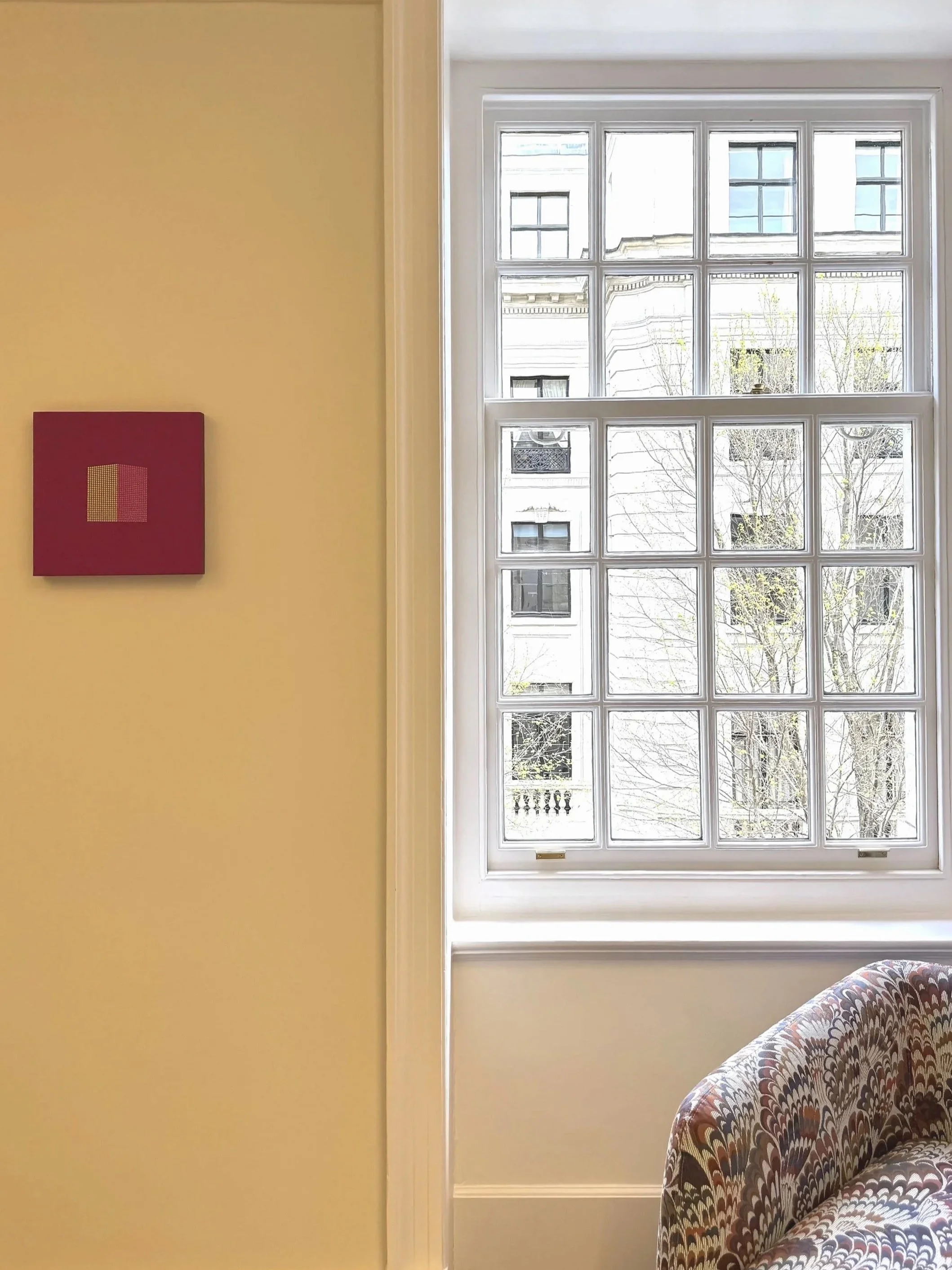
In the works in this presentation Jaray has used a computer-guided laser cutter to create a fine lattice of holes in a sheet of paper before painting it with acrylic and laying it over a painted panel. This process leaves a tiny space between the two areas of colour, within which one can see the suggestion of a third colour - the cut edge of the white paper. This delicate extra layer on the surface casts an exceptionally fine shadow onto the panel beneath and so Jaray's completed object sits ambivalently between two and three dimensions, painting and sculpture.
Equally grounded in a meticulous and process-driven approach, Oliver Marsden’s paintings share a concern with perception, surface, and the shifting relationship between light and space. His works are hypnotic, drawing the viewer into a quiet, meditative state that encourages a slower, more attentive way of looking.
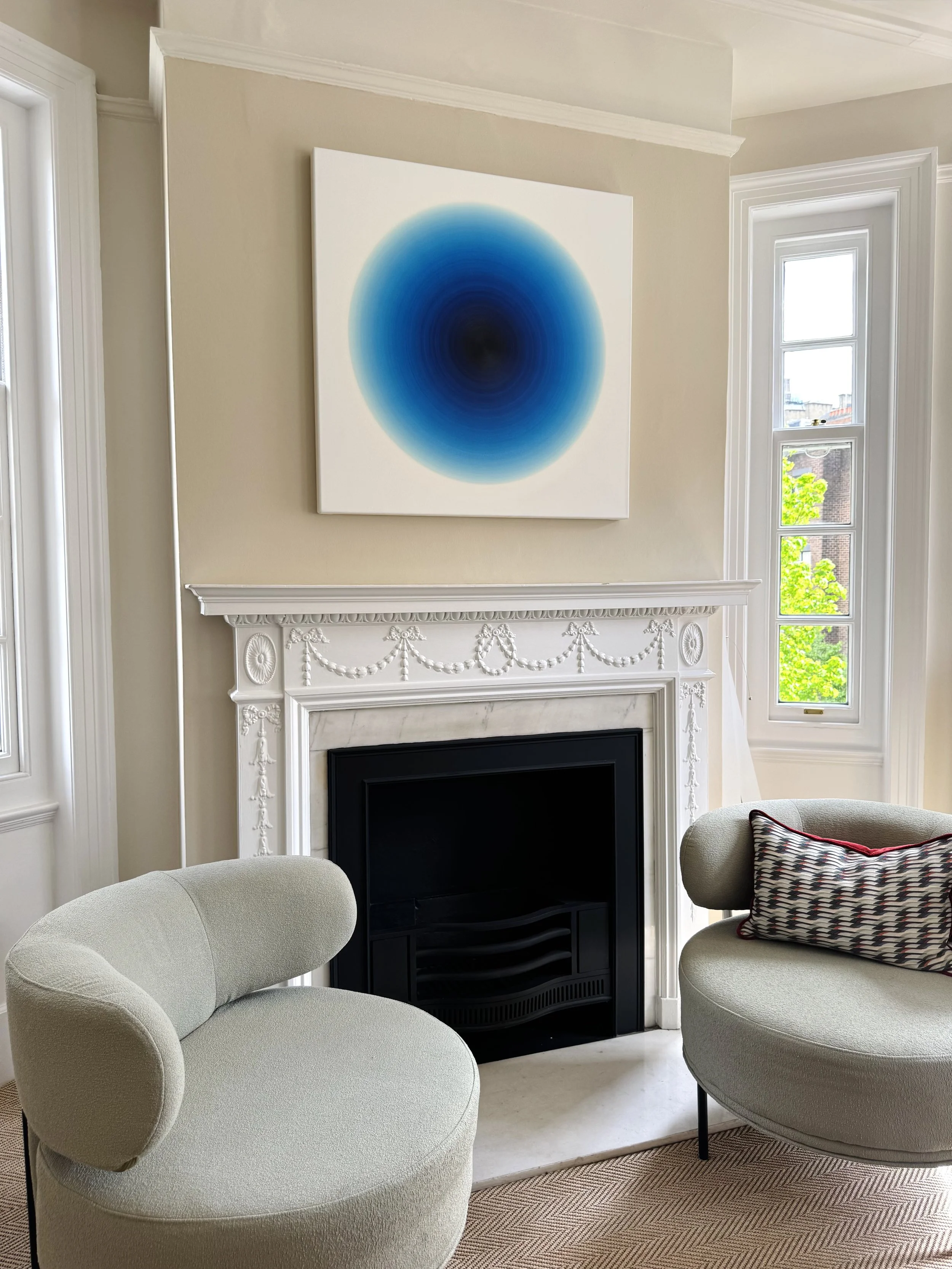
In Marsden’s Harmonic series he explores the movement of water and sound vibrations. As the canvas spins on the wall, layer upon layer of glaze and thinned paint is applied, forming concentric rings that appear to hover in a state of flux. The works pulsate, exerting a physical pull on the viewer. Each painting exists in constant dialogue with its surroundings, the surface shifting and transforming as the viewer moves around it, the light catching and releasing it in turn.
An extension of the Harmonic series is Marsden’s Fade paintings which was first developed in 2004 as a commission for the foyer of a residential apartment building in London. In response to the brief of capturing the effect of light on water he employed smooth gradations of colour to suggest the shifting, unstable nature of water and the experience of light itself.
He returned to this idea during his 2009 residency and exhibition In Praise of Light in Koumi, Japan, where the surrounding mountain landscape and exposure to historical Japanese art, particularly the work of Katsushika Hokusai, influenced his approach. The softened skies and atmospheric fading in Hokusai’s prints informed Marsden’s interest in how mist, distance, and weather dissolve form. The series was realised in 2016, culminating in works rooted in memory and sensation that aim to recreate particular experiences of light through carefully balanced colour relationships and subtle, immersive transitions.
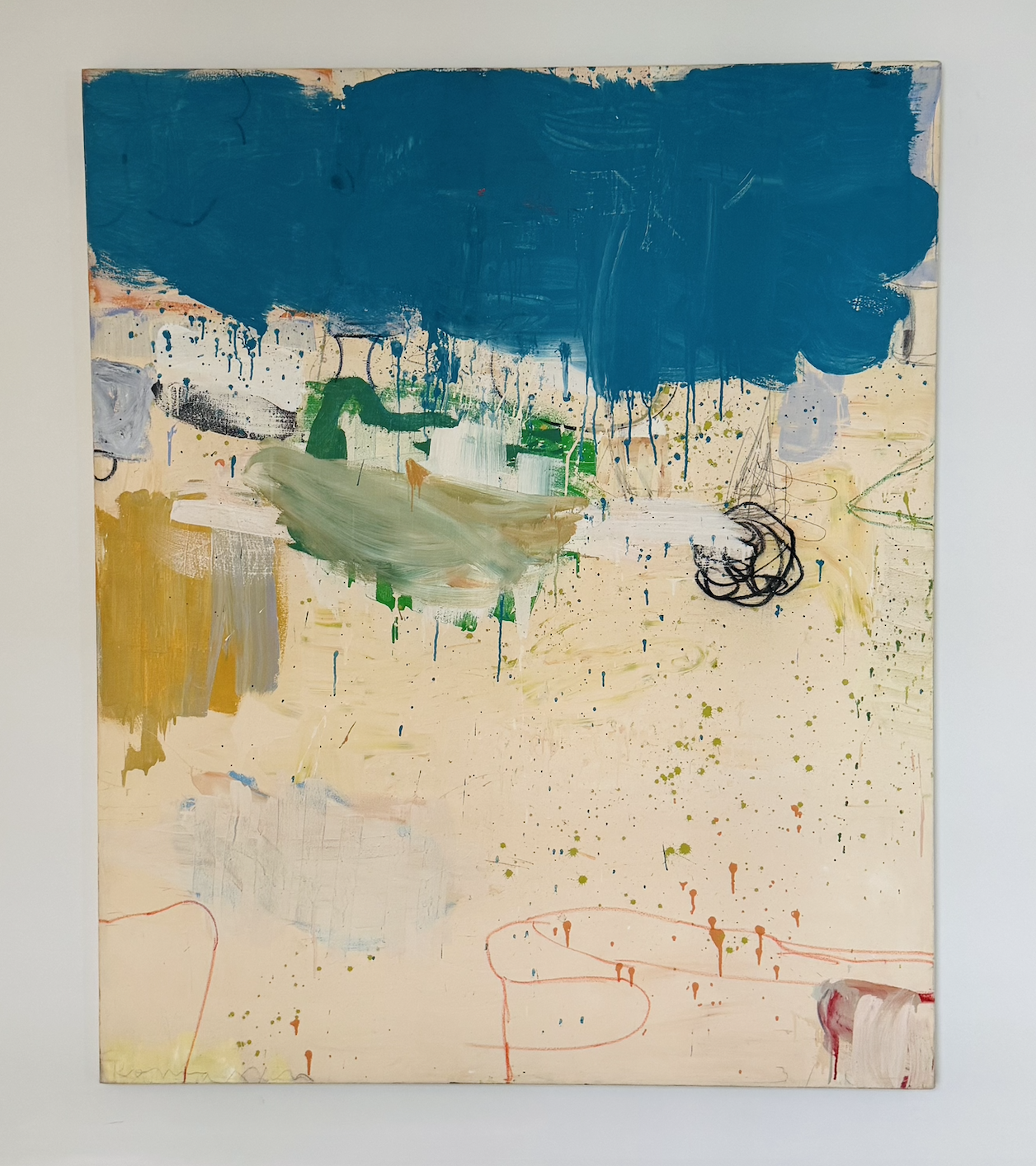
By contrast, Gary Komarin’s work explores the limits of abstraction by allowing forms to hover between recognition and uncertainty. Believing that clearly defined imagery restricts meaning, he works against these constraints, producing paintings marked by a tension between clarity and ambiguity, where clean lines and familiar shapes never fully resolve into literal representations, encouraging the viewer to engage in personal interpretation.
Using fast-drying house paint and water-based enamel, Komarin’s process is intuitive and immediate: painting on the floor, he responds rapidly to each mark as it emerges, often moving between multiple canvases over the course of a day. This improvisational approach produces a rhythmic, unfolding visual language in which order and chaos coexist.
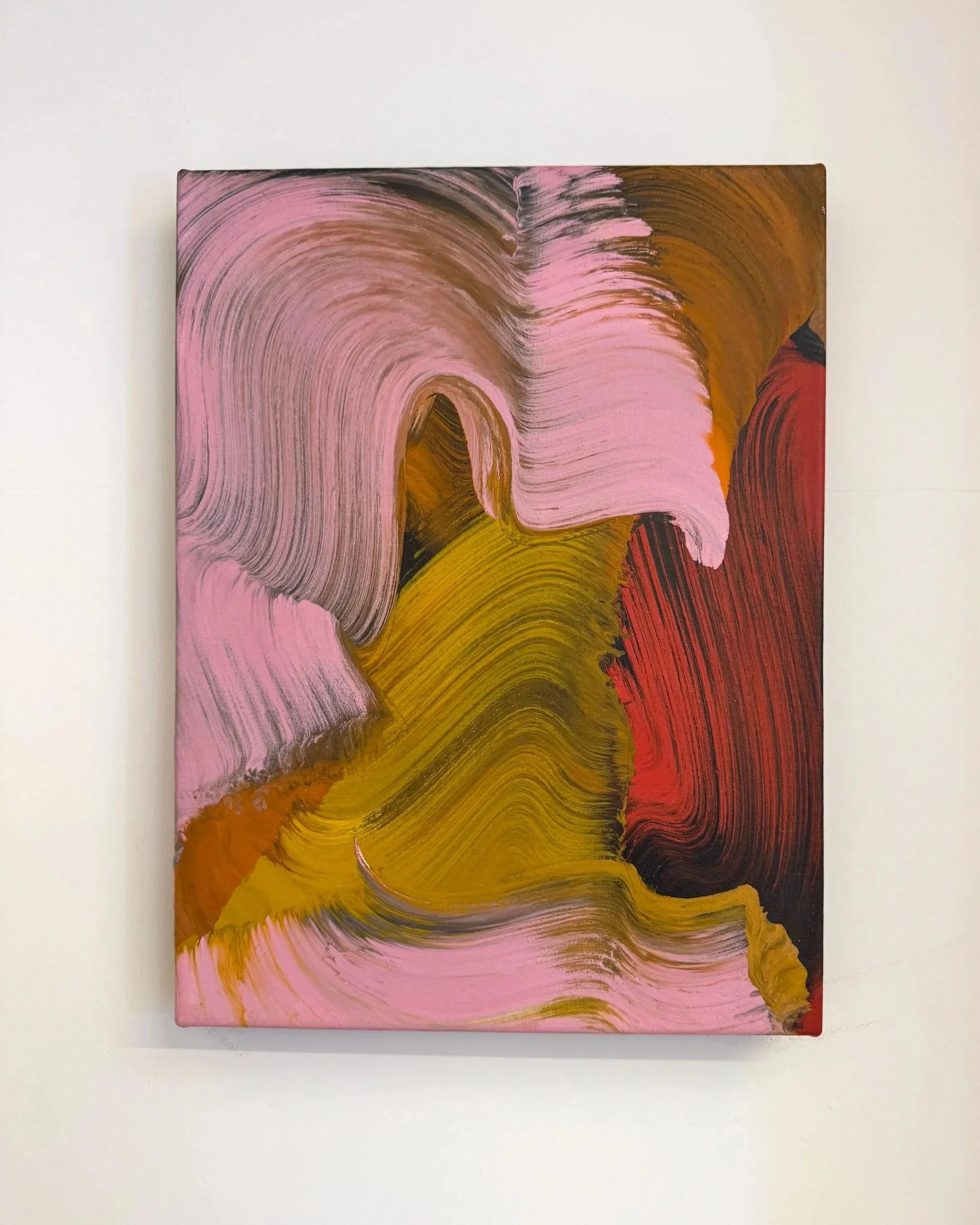
Taking this physicality further, Erin Lawlor works alla prima (wet-on-wet) with canvases laid flat on the ground; working often on a large, immersive scale, she adopts a fully physical, gestural approach, responding quickly to the fast-drying paint. Her compositions emerge through a synthesis of layers that gradually resolve into a singular formal unity, where colour and motion become inseparable. The oil paint appears fluid and sensuous, as sweeping, undulating brushstrokes dance across the canvas, imbued with a palpable sense of energy.
Lawlor’s process is intuitive, with colour functioning as an emotional force that shapes the viewer’s response. Rather than describing or representing, her use of colour evokes sensation, drawing the viewer into a deeply immersive and physical encounter with the work.
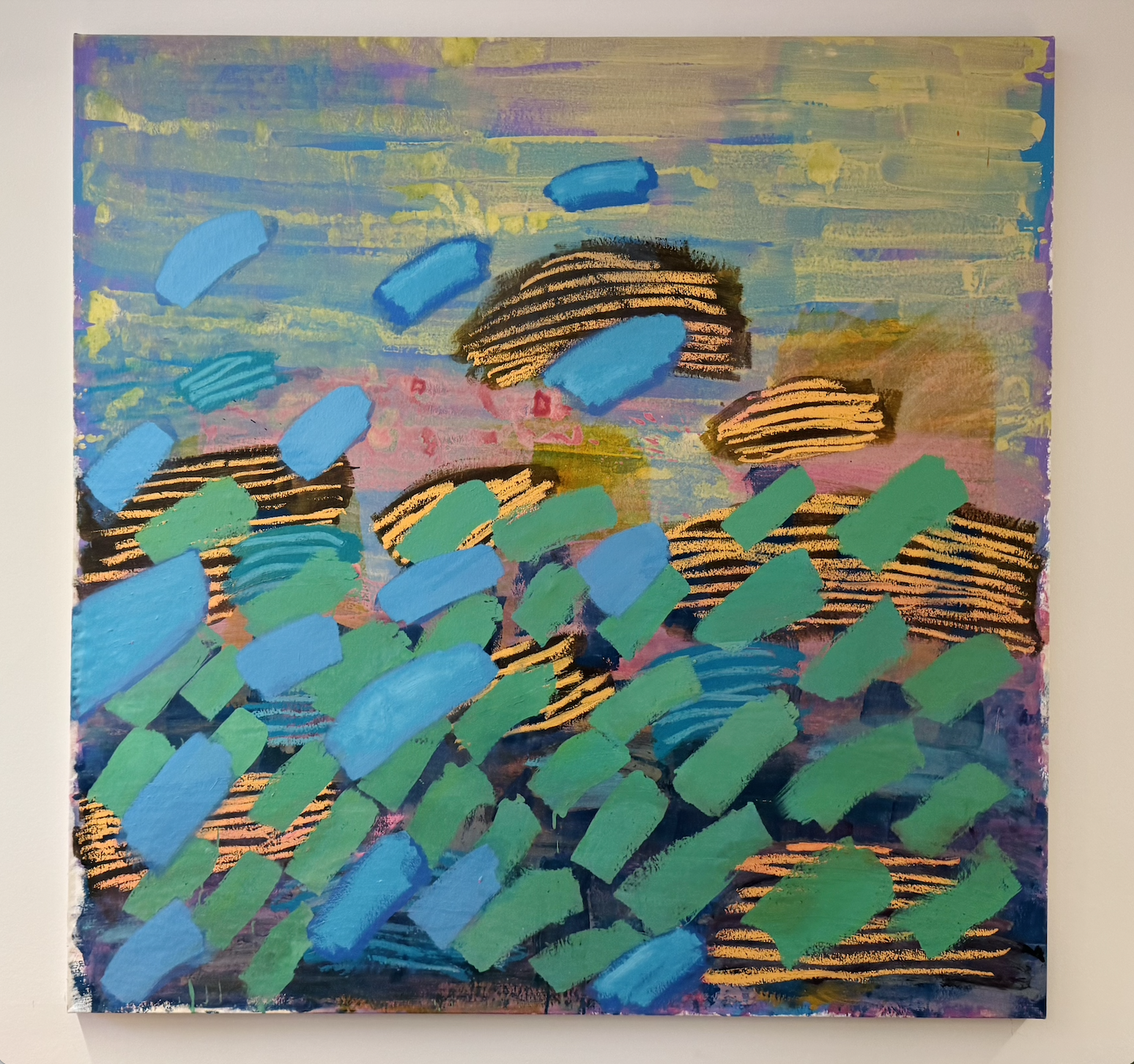
In a similar way Rebecca Gilpin’s painting acts as a vehicle through which she processes emotion and makes sense of the world. The bold, gestural forms in her work, which are rooted in the traditions of Abstract Expressionism, are informed by an interest in spirituality which underpins her imagery and colour palettes are informed by an emotional and intuitive response to her surroundings.
Her love of music also often finds its way into her work and in the act of painting, she employs her entire body creating bold, rhythmic marks in an instinctive response to the music that fills her studio. This immersive process culminates in large, multi-layered action paintings, where the rhythmic interplay between her body and brush infuses her works with a sense of freedom and spontaneity. Her works are often named after album names as is the case in this work, Constant is the Rain, which refers to a bossa nova song performed by Sergio Mendes and Brasil ‘66 and colour palettes often echo those of the album covers she has unconsciously absorbed, weaving the spirit of music and popular culture into her bold and expressive compositions.
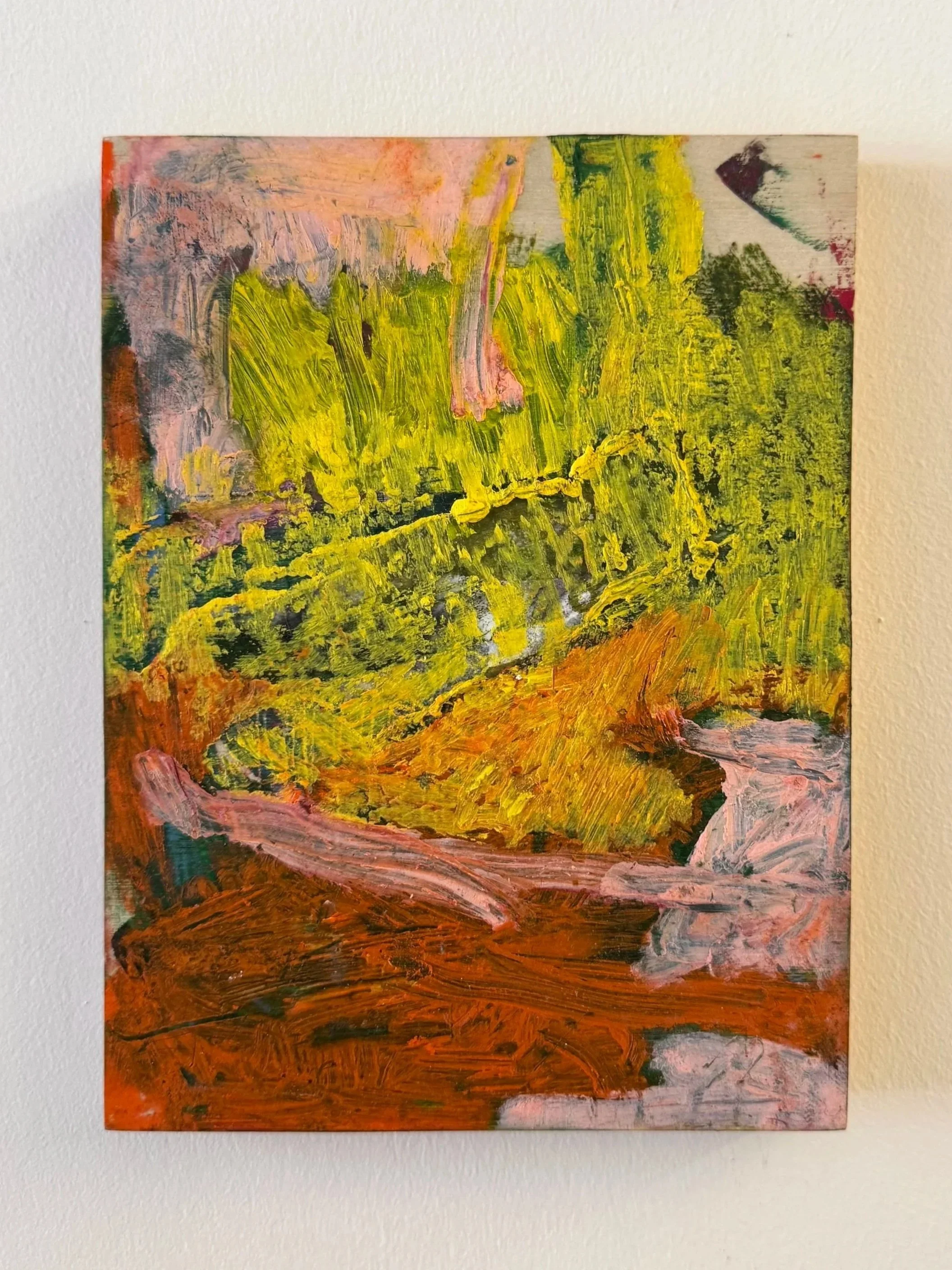
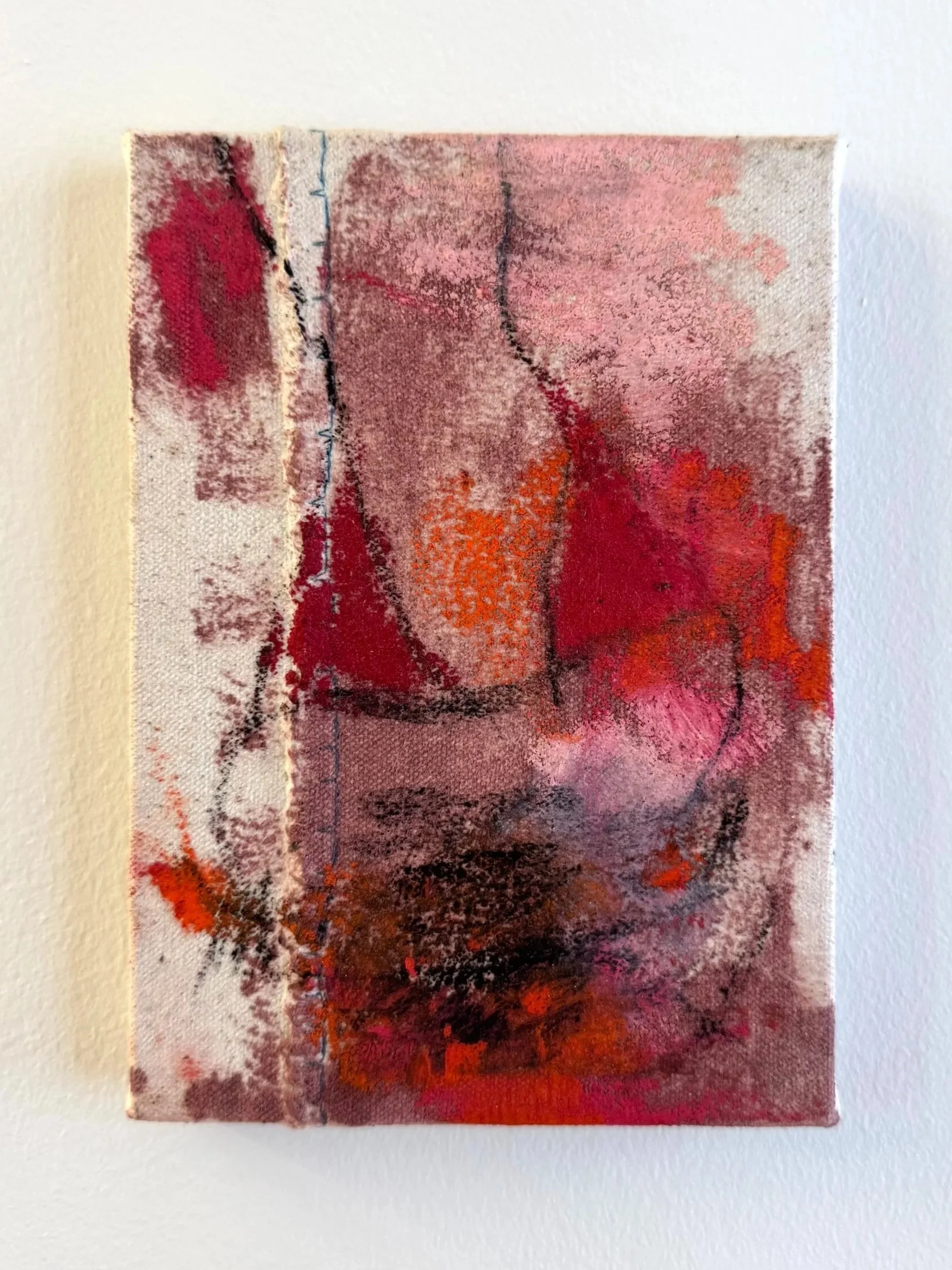
Ellie Walker’s abstract works range from tiny canvases akin in scale to religious icons - such as the two works in this presentation - to large, expansive pieces of bold, intense and often frenetic colour. The physicality of Walker’s process, during which un-stretched canvases are often stapled to the wall, laid on the floor or flipped upside down, and are sometimes the result of older canvases being torn up and stitched back together is felt keenly in her final pieces which often exist somewhere between painting and sculpture.
Colour and mark making is intuitive, as bold, energetic layers of paint sweep across the canvas in what the artist succinctly describes as a ‘sustained negotiation with materiality’. Indeed this description hints at the sense of agency that the act of painting has in her work as if separate to her own ideas and control. As such, there is a tension inherent in her work, where uncertainty, failure, and risk are all embraced to create paintings that insist on materiality beyond the scope of human intent and any predetermined outcome. These paintings act as visual records, holding traces of experience and feelings through matter itself, forming emotional terrains that hold complexity, contradiction and ever-changing states of being.
-
Artworks (top row):
Oliver Marsden ‘Spring Blue Harmonic II’, 2017 - Oil on canvas, 90 x 90 cm / 35.43 x 35.43 inches.
Tess Jaray ‘After Damascus, 5 Green Curtain’, 2009 - Painted laser cut on paper laid on board, 77 x 61 cm / 30 x 24 inches.
Tess Jaray ‘After Malevich 19’, 2012 - Acrylic and paper on board, 29.5 x 29.5 cm / 11 11.61 x 11.61 inches.
Artworks (middle row):
Gary Komarin ‘A Suite of Blue Sea Laguna Beach’, 2009 - Water based enamel, oil, crayon, charcoal and pencil on canvas, 182 x 152 cm / 71.65 x 59.84 inches.
Erin Lawlor ‘Pop goes the weasel’, 2022 - Oil on canvas, 40 x 30 cm / 16 x 12 inches
Artworks (bottom row):
Rebecca Gilpin ‘Constant is the Rain’, 2025 - Acrylic, oil and oil stick on canvas, 160 x 160 cm / 63 x 63 inches.
Ellie Walker ‘Sweater Weather’, 2025 - Oil, oil stick, pencil and paper on board / 20 x 15 cm / 7.8 x 9.8 inches.
Ellie Walker ‘Bikini’, 2025 - Oil, oil stick and thread, charcoal on canvas / 20.5 x 25.5cm / 8 x 10 inches.